The Mural and the Wall: Why Surface Changes the View
Mural and wall surface shape how a picture reads in place; learn what to notice about scale, texture, openings, and street activity on a walk.
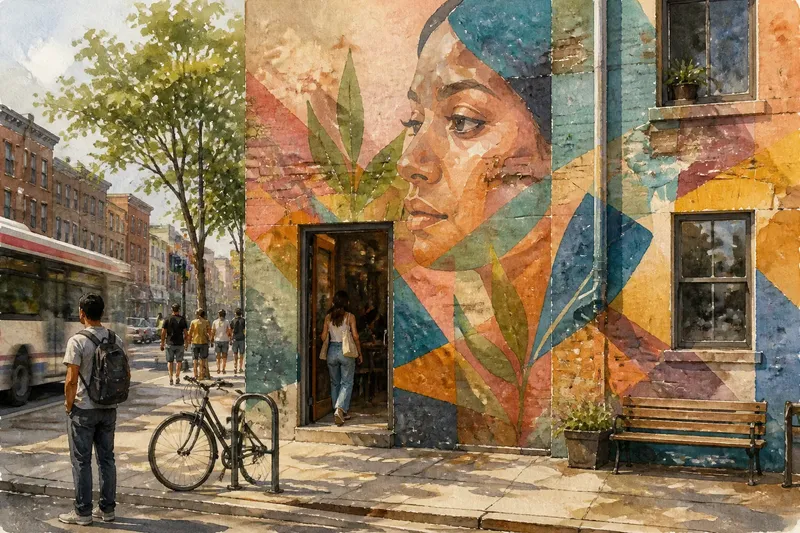
A painted face seems to look straight at you until a bus passes, a doorway cuts through the image, or afternoon light catches the wall’s rough patches. A mural and wall surface are read together: the building can enlarge, interrupt, or redirect the picture. On a walk, a few deliberate comparisons reveal more than trying to absorb the whole scene at once.
Start with the wall as a physical object
From across the street, a mural can appear like a single, flat image. Up close, the wall becomes harder to ignore. Brick joints interrupt outlines; concrete pores scatter paint; old repairs form ridges beneath a smooth field of color. These details are not a frame around the artwork. They are part of what the eye has to read.
Surface changes how an image holds together. A crisp geometric shape may seem orderly on a flat panel, then break into smaller marks where mortar lines pass through it. On uneven stucco, the same mark can waver. The effect might look deliberate, accidental, or simply specific to that wall. It is useful to distinguish what is visibly there from what you infer about the artist’s intention.
Distance offers a quick comparison. Look from a place where the whole mural fits into view, then move closer until its edges or texture become prominent. At the first position, color blocks and overall composition tend to dominate. Nearer in, brushwork, seams, flaking paint, and changes in the wall’s plane can take over. Neither view is the correct one; each makes a different set of decisions visible.
Compare a broad wall with a broken one
A broad, uninterrupted wall gives an image room to hold together. It suits murals that depend on a continuous scene, a large silhouette, or a strong arrangement of colors. The eye can travel across the work without negotiating many physical breaks. That openness can also make a mural feel detached from its building, especially if the image could be imagined on almost any blank surface.
A wall broken by windows, doors, drainpipes, or changes in depth asks for a different kind of attention. Openings may interrupt a figure, divide a scene into panels, or leave the painted image visible only from certain angles. The building’s ordinary uses remain in view: someone enters through a door, a window reflects the sky, and a pipe casts a narrow shadow. This approach suits a setting where the mural shares space with daily movement rather than replacing it.
Imagine a neighborhood café with a mural beside its entrance. From the far curb, the image reads as one lively composition. Near the door, the entrance frame separates one painted figure from another. As customers pass through, each person briefly covers part of the mural; once the doorway clears, that part of the image becomes visible again. The opening therefore acts like a pause in the composition, while passing bodies interrupt its rhythm. That is an observation about how the mural meets the building, not evidence of what its maker intended.
When choosing which wall condition to attend to, ask whether the image’s force comes mainly from continuity or interruption. A continuous image rewards a view that takes in the whole plane. A broken one often rewards a short walk along the frontage, where openings and shifting angles reveal how the composition changes.
Notice what scale asks of the viewer
Scale is not just a matter of how tall a mural is. It also depends on the distance from which people encounter it and on what sits around it. A large painted form can feel intimate on a narrow lane, where the viewer is close to its marks. A smaller image may command attention on a long, bare wall because little else competes with it.
Look for a human reference point: a doorway, a parked bicycle, a bench, or someone crossing the scene. These familiar objects help you judge whether the mural meets people at their own scale or turns them into small figures beneath a larger field. The result can shift as you move. An image that seems monumental from across an open plaza may become a collection of modest painted gestures from the edge of the wall.
Scale also affects how long it takes to look. A mural with a strong central image may register almost immediately from a passing vehicle. A wall filled with small details might resolve only for someone walking or waiting nearby. That difference is not a ranking. It tells you which kinds of attention the site makes possible, and which viewers are likely to have time for them.
Let texture and light complicate the image
Texture can make paint appear to sit on the surface, sink into it, or break across it. Brick courses may turn a smooth contour into a repeated sequence. Corrugated metal can split a color field into narrow bands. A patched section of plaster may catch light differently from the surrounding wall, making a painted area seem raised or recessed even when it is not.
Light changes these effects without changing the mural. In direct sun, shallow ridges can cast hard shadows; in softer light, they may nearly disappear. Reflections in nearby glass can add a moving layer over the image. If you revisit the same wall at another time of day, compare the parts that remain legible with those that become harder to separate from the surface.
Weather and maintenance matter, too. Faded passages, peeling edges, and a newer patch can alter the balance between image and building. Resist treating every change as a flaw with a single explanation. What you can observe is the condition of the surface and how it affects visibility; the reason for a repair or the history of a paint layer may not be apparent from the sidewalk.
Follow the activity around the mural
A mural occupies a place that keeps functioning. People walk past, queue at a window, wait for a light, or stop to talk. Vehicles and signs may block the view for a moment. These ordinary interruptions can make an image feel closely tied to its setting, or leave it difficult to see except from a particular position.
Notice where people naturally pause and where they keep moving. A painted image beside a bus stop may be seen in repeated, brief visits. One on a blank side wall might be visible mainly from across the street. The difference affects not only how much detail someone can take in, but whether the mural becomes part of a routine view or a destination people approach deliberately.
For a walk, keep the prompts simple: Where does the whole image first come into view? Which opening or surface seam changes its composition? What detail appears only when you move closer? What activity repeatedly crosses your sightline? What remains readable when a person, vehicle, or reflection interrupts the view? A few short notes are enough; the goal is to pay attention, not to turn a sidewalk into a fieldwork station.
Which view should you choose for a mural walk?
Where should you stand to see the whole mural?
Look for a safe public vantage point where the main painted area fits into your view, then note any part hidden by a corner, tree, or street fixture. This approach suits murals whose composition depends on an overall arrangement rather than close surface detail.
How can you tell whether an opening shapes the image?
Compare the mural from directly in front with a view from farther along the sidewalk. If a doorway, window, or column changes which painted parts line up or remain visible, the building is actively shaping the view rather than merely holding the paint.
What should you look for in a textured wall?
Notice whether brick, stucco, metal, or a repaired patch interrupts a contour, changes a color, or catches light differently. This suits a slower, closer look, especially when the mural’s surface appears to shift as you move.
When does street activity matter most?
Watch the sightline for a short while from a place that does not obstruct anyone. If recurring movement hides, reveals, or briefly joins parts of the image, the mural’s everyday setting is central to how people encounter it.
Choose the approach that fits the wall
For a mural on a broad, nearly flat surface, begin with the distant view and then move closer to check how the image holds up. For a wall with openings or a strong texture, walk along it and compare viewpoints before deciding what the composition seems to do. For a busy frontage, give ordinary movement time to enter the scene; a clear view may be the exception rather than the usual condition.
These approaches can be combined, but one often gives the walk a useful center. Choose the broad view when scale and overall arrangement matter most, the moving view when architecture interrupts the image, or the waiting view when repeated activity keeps altering it. The mural and wall surface become easier to understand when you treat each position as a different reading, not as a better or worse version of the same one.
On your next mural walk, start by finding the place where the image is least complete: the edge of a doorway, a rough repair, a turning corner, or a passing stream of people. That is often where the wall stops behaving like a neutral support and starts explaining what the mural can be in that particular place.